 |
| Project Management |
Project
Management MGMT627
VU
LESSON
27
PROJECT
SCOPE MANAGEMENT
BROAD
CONTENTS
Scope
Project
Scope Management
27.1
SCOPE:
The
term "scope" refers to:
·
Product
Scope:
This
includes work to deliver a
project's product/service with
specific features and
functions.
The result can be a single
product or you can have several
components. The
features,
functions, and characteristics to be
included in a product are
measured against set
product
requirements and are managed throughout
the lifecycle.
·
Project
Scope:
Project
scope refers to the work that
must be done in order to deliver a
product, service,
result
with specified features and functions.
Project scope has a start
and end date, possesses
unique
characteristics or attributes, and
produces specific results
during the lifecycle.
27.2
PROJECT
SCOPE MANAGEMENT:
Scope
management is concerned with
defining and controlling the
scope of a project. It
includes
product
description, any known constraints and
assumptions. Project scope is
defined in project
charter.
It serves as a basis for
development of Work Breakdown Structure
(WBS). It must be
verified
and controlled throughout the life of the
project.
Project
scope management includes the
processes required to ensure
that the project includes
all
the
work required to complete the project
successfully. It is primarily concerned
with defining
and
controlling what is or is not
included in project.
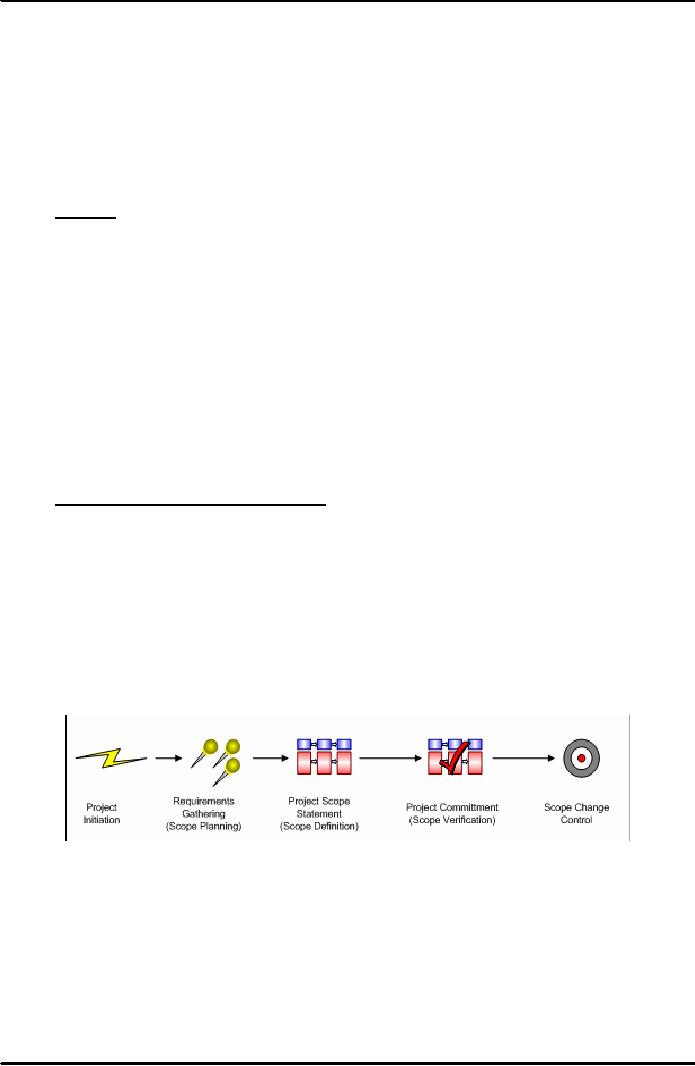
Figure
27.1: Scope
Management Process
The
scope management process
comprises of the following:
·
Project
initiation: Approve Business
case, feasibility,
budget
·
Scope
planning: Gather requirements
·
Scope
definition: Create scope
components, scope divide
work
·
Scope
verification: Get approval
from all stakeholders
·
Scope
change control: Manage scope
change requests
191
Project
Management MGMT627
VU
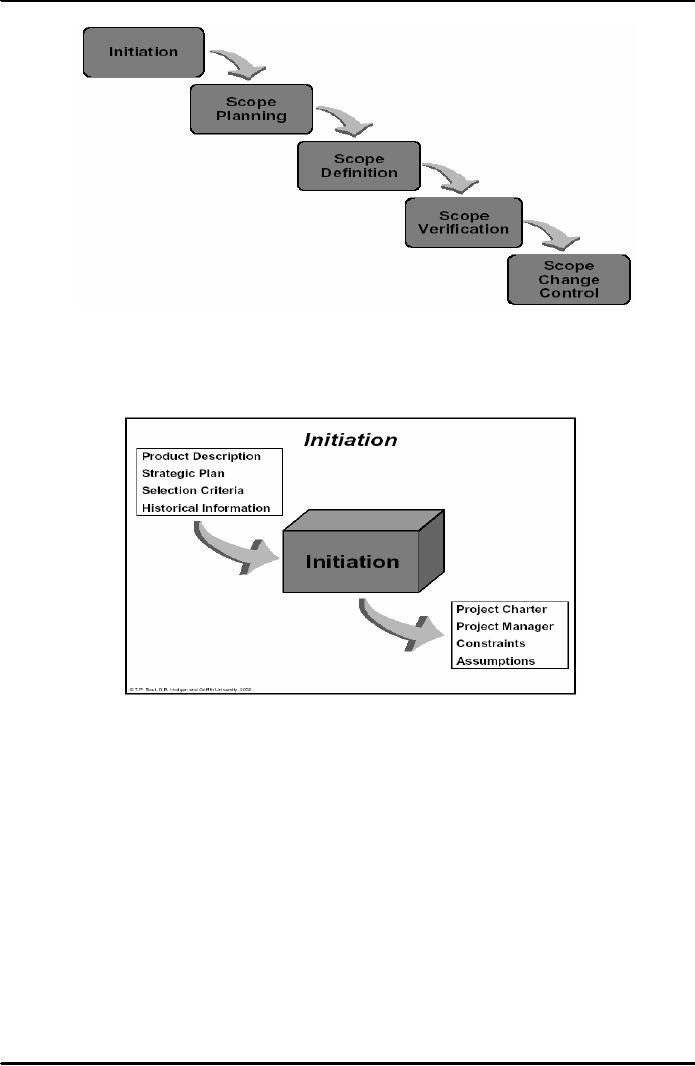
Figure
27.2: Managing
Project Scope Phases
27.2.1
Initiation Phase:
As
described in the previous lecture, it is the
process of formally recognizing
that a new
project
exists or that an existing project
should continue into its
next phase
Figure
27.3: Initiation
Phase
27.2.2
Project Scope Planning:
It
refers to creating a project scope
management plan that
documents how project
scope
will
be defined, verified, controlled and
how the Work Breakdown Structure
(WBS)
will
be created and defined.
Process
of developing a written scope
statement as the basis for
future project decisions
including,
in particular, the criteria used to
determine, if the project phase
completed
successfully.
192
Project
Management MGMT627
VU
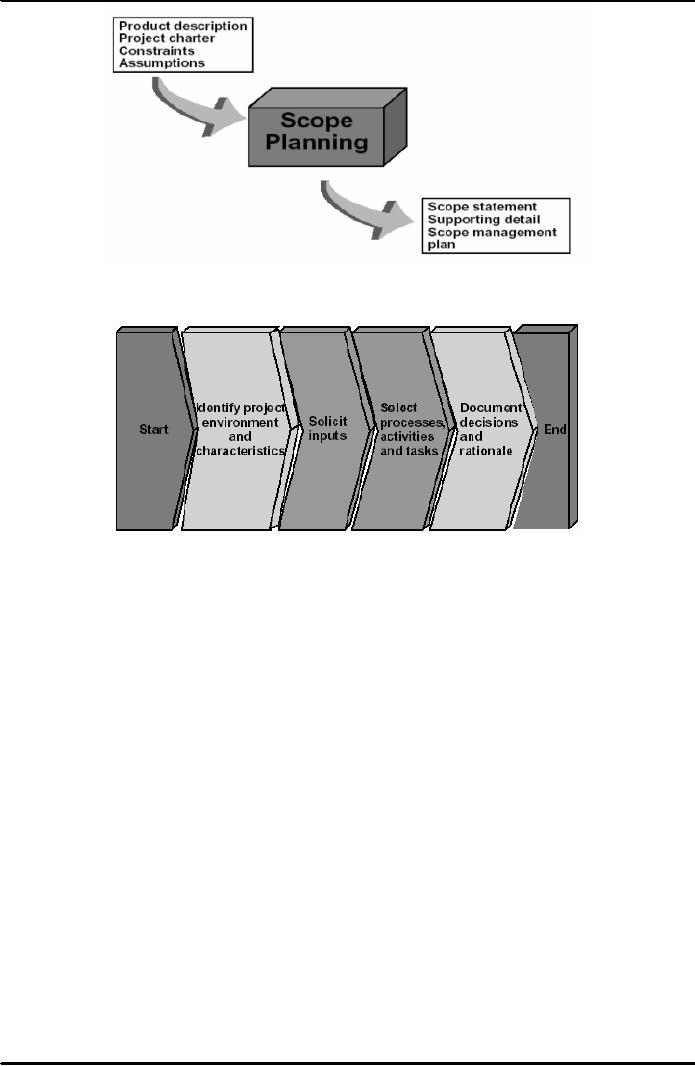
Figure
27.4: Scope
Planning
27.2.2.1Applying
the Process
Model:
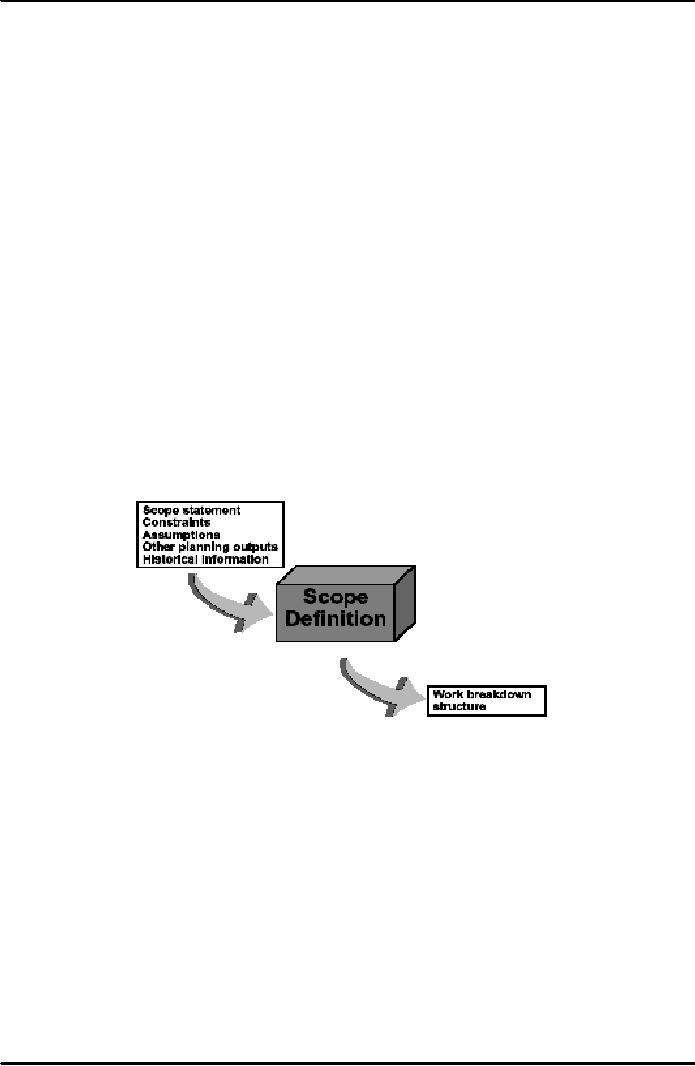
Figure
27.5: Process
Model
1.
Define
Scope: I
It
is always essential to know
what the goals of the project
are.
This
needs to be defined in exact and
quantitative terms:
What
the project is supposed to achieve
o
What
the project is not supposed to
achieve
o
This
is achieved through the definition and
management of the
project
scope.
2.
Identify
Project Environment and
Characteristics:
Identify
what processes are already
in place. If process is
fundamental
to achieving organization's goals? Is
there high
risk
involved in business? What the
problem areas are?
Also
what
type of an organizational culture exists
(is it easily
adaptable
or adverse to change)? Lastly,
identify what the
requirements
are?
3.
Solicit
Inputs:
The
requirements for project are a
major driver. The
affected
parties
should be involved in the process.
These people ensure
resulting
processes are:
193
Project
Management MGMT627
VU
a)
Feasible
/useful
b)
Possible,
including feedback of previous
projects
4.
Select
Processes, Activities and
Tasks:
Identify
and prioritize processes or
parts of process within
the
standards
that will be implemented. It is
useful to include
"mapping
current processes" practices
and/or methods to
processes
activities and tasks. Mapping
must be used to
verify
and
to identify gaps between the current
situation and
target
situation.
5.
Document
Decisions and Rationale:
Document
refers to the mapping of defined
processes, activities
and
tasks to determine relationships
and reasons for
adopting
this
approach. This document should be
included into the
Project
Management Plan".
27.2.3
Project Scope Definition:
This
involves subdividing major
project deliverables (as
identified in scope
statement)
into
smaller, more manageable
components.
Figure
27.6: Scope
Definition
The
benefit of scope definition is to
improve accuracy of estimated
cost, time, and
resources.
The baseline for performance, measurement
and control is defined.
It
facilitates
clear responsibility and
assignments.
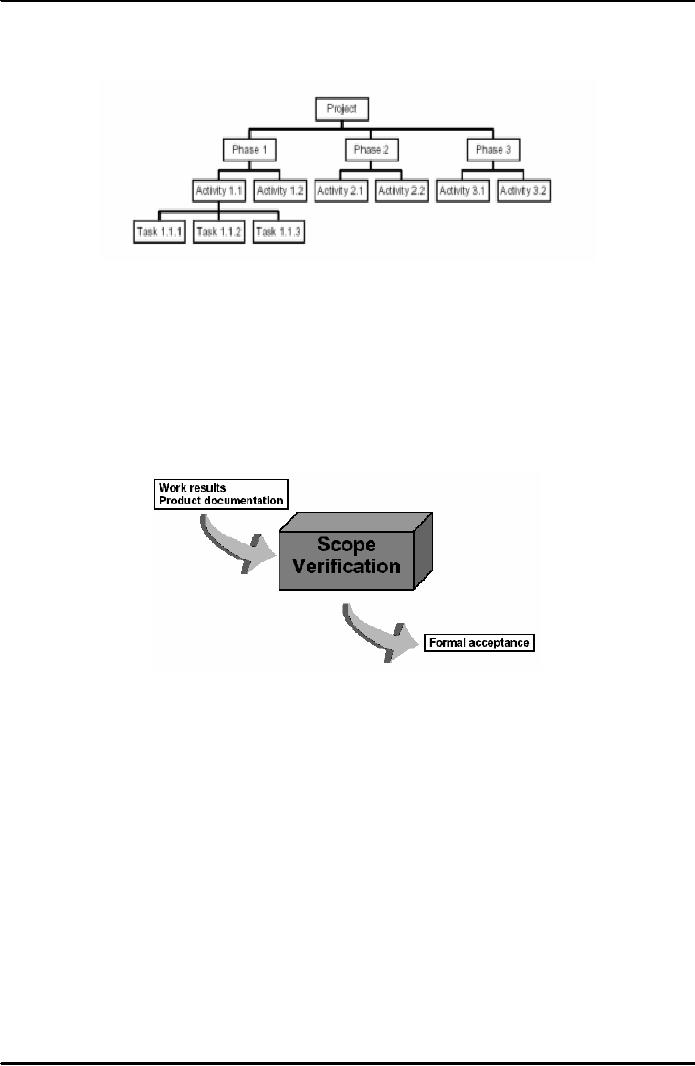
27.2.3.1Work
Breakdown Structure
(WBS):
Deliverable
oriented grouping of project
elements that organizes
and
defines
the scope of the project that
work not in Work
Breakdown
Structure
(WBS) is outside the scope of
project.
As
with the scope statement,
Work Breakdown Structure (WBS)
is
often
used to develop or confirm a common
understanding of project
scope.
194
Project
Management MGMT627
VU
Each
descending level represents an
increasingly detailed description
of
project
elements.
Figure
27.7: Model
Work Breakdown Structure
(WBS)
A
Work Breakdown Structure (WBS) is
normally presented in chart
form.
Each item in it is generally
assigned a unique
identifier often
known
collectively as "code
of accounts".
Items at lowest level
of
Work
Breakdown Structure (WBS) are
known as work
packages.
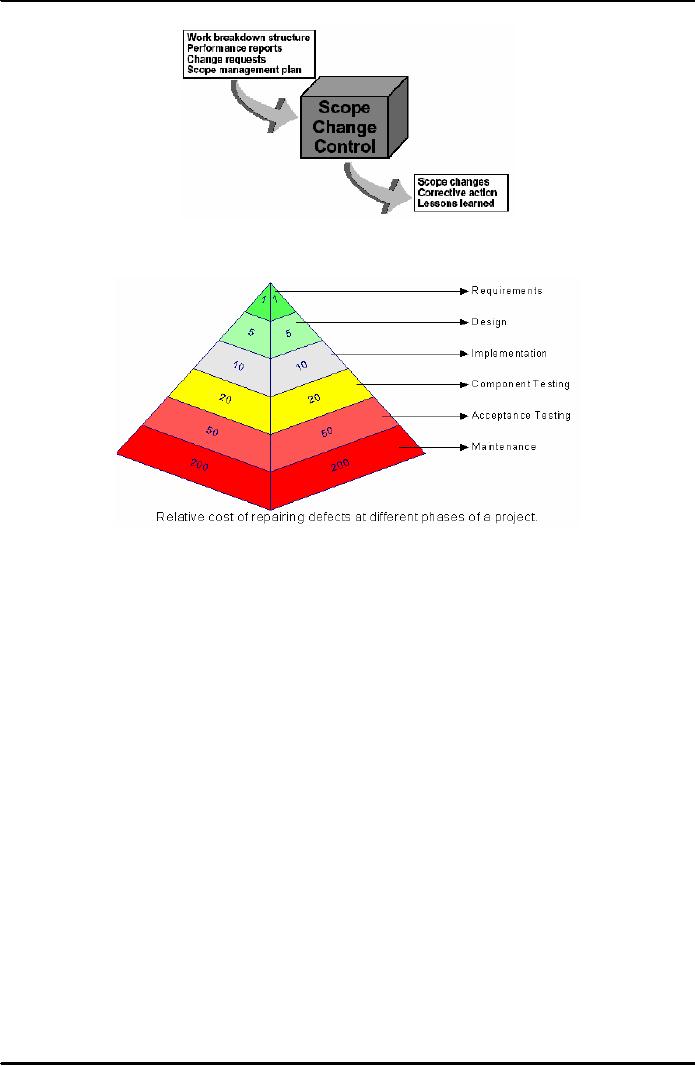
27.2.4
Scope Verification:
It
is the process of formalizing acceptance
of the project scope by
stakeholders
(sponsor,
client, customer, etc.).
Figure
27.8: Scope
Verification
27.2.4.1Formal
Acceptance:
It
is the documentation of the product,
project or phase acceptance
by
the
client and/or sponsor. It must be
prepared and distributed. Such
acceptance
must be conditional, especially at the
end of every phase.
27.2.5
Scope Change
Control:
It
defines procedures by which
project scope must be
changed. It includes
paperwork,
tracking
systems, and approval levels
necessary for authorizing
changes. Scope change
control
system should be integrated
with overall change control
system. In particular,
with
any system in place to control
product scope.
Scope
change control is concerned
with:
a)
Influencing
factors which create scope
changes to ensure that
changes are
beneficial.
b)
Determining
that a scope change has
occurred.
c)
Managing
the actual changes when and if they
occur.
195
Project
Management MGMT627
VU
Figure
27.9: Scope
Change Control
Figure
27.10: The
Cost of Scope Change
196